Building a Board That Actually Impresses
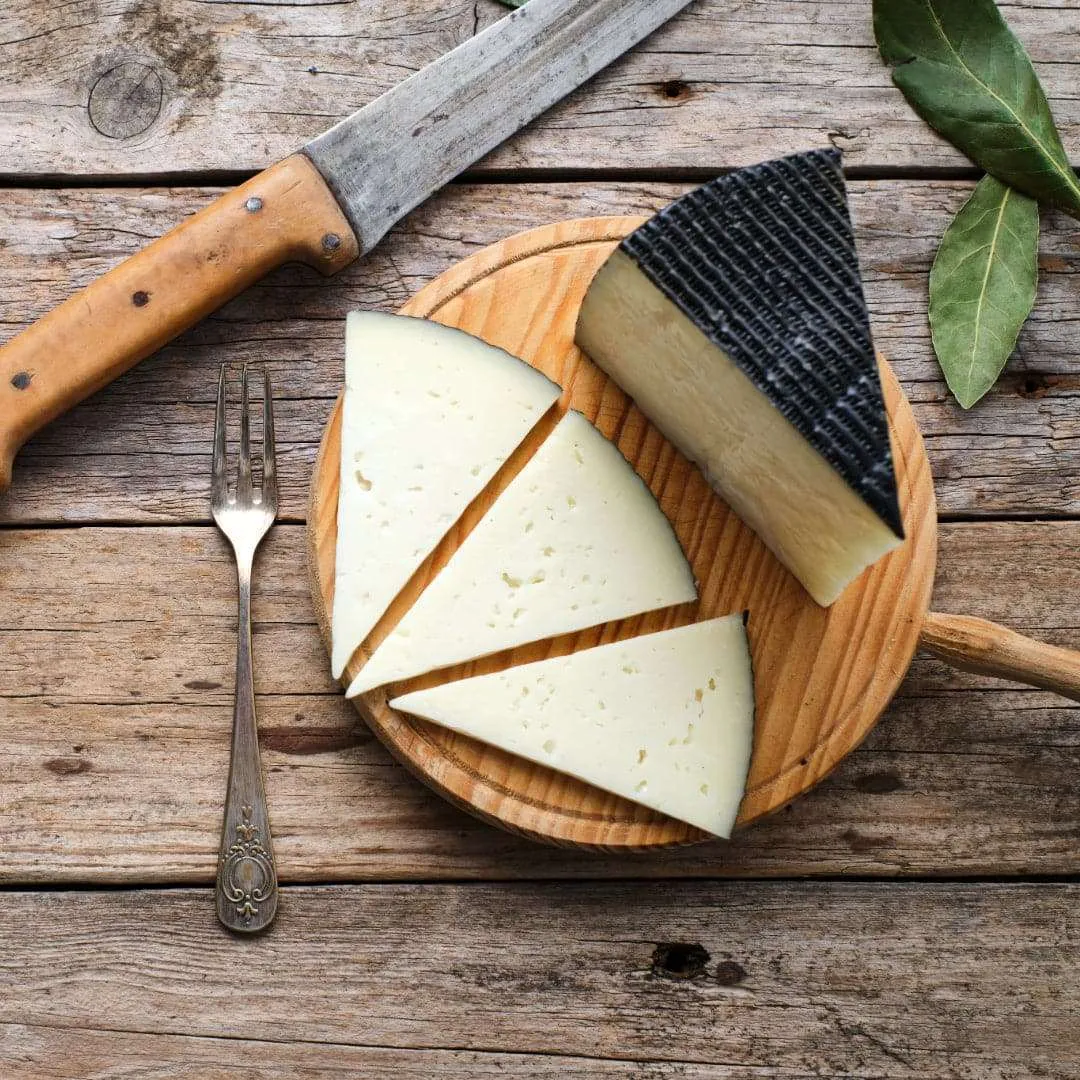
To build a charcuterie board: pick five good things — a soft cheese, a hard cheese, a cured meat, something crunchy, and something sweet or briny to cut the richness. Place the cheeses first, fill the gaps with folded meat, tuck the small things into the negative space, and pull everything out of the fridge thirty minutes ahead. It’s about ten minutes of arranging — the board is 90% shopping.
A good board isn’t about buying twenty things. It’s about buying five good things and giving each one room to breathe.
What goes on a charcuterie board?
Think in fives: a soft cheese, a hard cheese, a cured meat, something crunchy, something sweet or briny to cut the richness.
- Hard cheese — an aged Manchego or a good parmesan, broken into shards, not sliced.
- Soft cheese — something spreadable that plays against the hard one.
- Cured meat — folded, not stacked. Prosciutto draped in loose ribbons, salami fanned.
- Crunch — crackers or a sliced baguette.
- Contrast — olives, cornichons, a little honey or fig jam.
How do you arrange a charcuterie board?
Place the cheeses first, spaced apart. Fill the gaps with the meat, folded so it catches the light. Tuck the small things — olives, nuts — into the negative space. Leave it a little imperfect. A board that looks arranged looks nervous.
Pull everything out of the fridge thirty minutes ahead. Cold cheese tastes like nothing; room-temperature cheese tastes like the reason you bought it.
That’s it. Come by the counter and we’ll pull the pieces for you.